
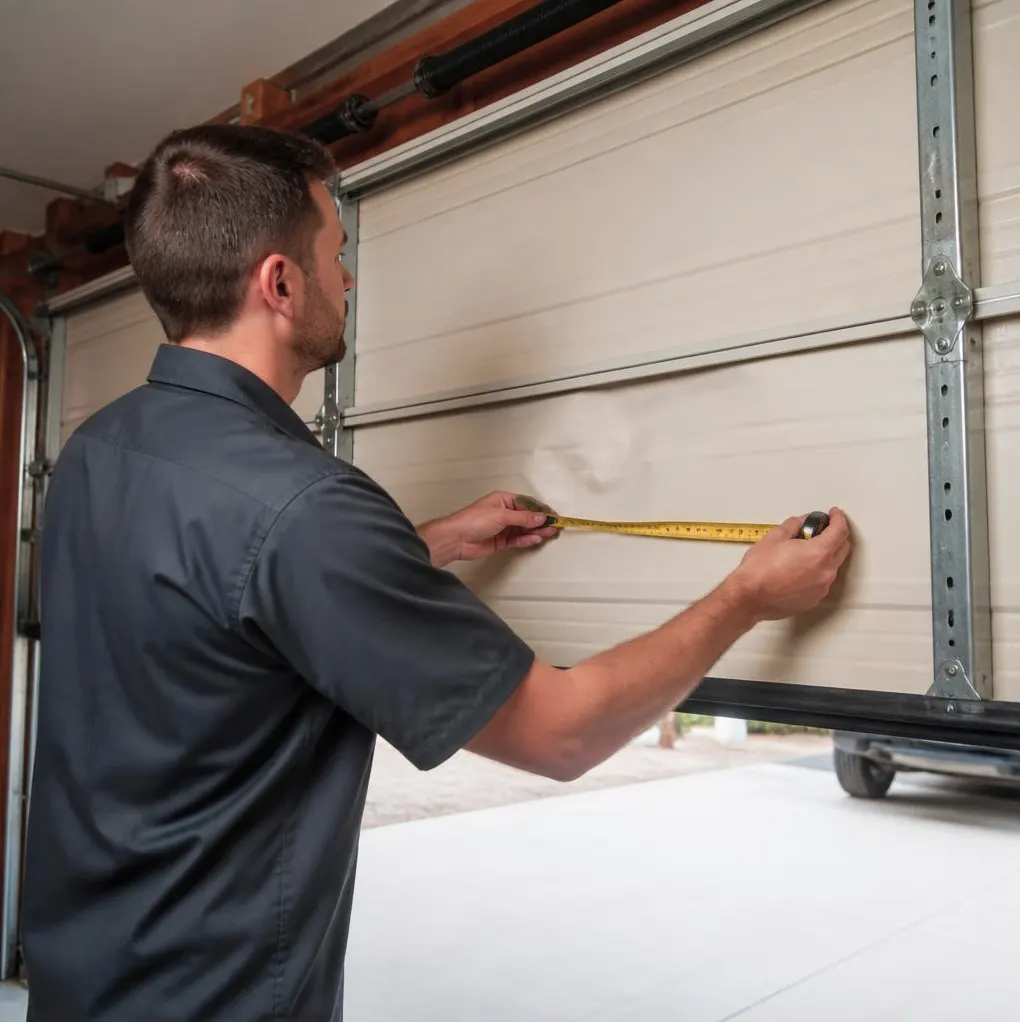
What a Technician Sees on a Typical Call
The call usually starts with something unrelated: the opener is making noise, or a spring just snapped. But once a technician is standing in the garage with the door down, the real story is often visible without even looking for it. Daylight shows through the gaps at the bottom corners. The weatherstripping along the sides has pulled away from the track or cracked into brittle chunks. The bottom seal is flattened, torn, or missing in sections. On older doors, the panels themselves have swelled slightly from years of humidity and no longer sit flush against each other.
None of that looks dramatic. But if that garage shares a wall with the living space, or has ductwork, a water heater, or an AC air handler sitting in it, those small gaps are a direct line between the outside air and the inside of the house.
Why This Matters More in an Attached Garage
A detached garage leaking air just wastes a little bit of its own temperature control, if it has any. An attached garage is different. The wall between the garage and the house is rarely insulated as well as exterior walls, and the door into the house often has only basic weatherstripping of its own. When hot, humid air builds up in the garage during the day, it pushes through every gap, every outlet, every seam around that shared wall. If the AC return or ducting runs through the garage, it's pulling in warm air before it even gets a chance to circulate conditioned air through the house.
This is especially relevant locally because of how hot and humid garages get here for most of the year. A garage with a leaky door isn't just a few degrees warmer than the house — it can sit closer to outdoor temperature and outdoor humidity, which means more heat and moisture constantly pressing against that shared wall and door.
Where the Air Actually Gets In
- Bottom seal: The most common failure point. A flattened or torn seal leaves a gap along the entire width of the door.
- Side and top weatherstripping: Cracks or gaps here let air in along the frame, not just underneath.
- Between panels: On older steel doors, moisture swelling or minor warping keeps panels from closing tightly against each other.
- Around the opener's emergency release or vents: Smaller, but still a path for air exchange.
A Two-Minute Test to Settle the Argument
No need to guess. On a hot afternoon, close the garage door and turn off the garage light. Have someone stand outside with a flashlight pointed at the door seams while the other person stands inside in the dark. Any light that shows through is air that shows through too. For the bottom seal specifically, try the classic dollar-bill test: close the door on a dollar bill at a few points along the bottom. If it pulls out without resistance, the seal isn't doing its job anymore.
What Actually Fixes It — Ranked by Effort
- Replace the bottom seal: Inexpensive and often the single biggest improvement. A fresh seal compresses tightly against the garage floor instead of letting air roll underneath.
- Replace side and top weatherstripping: Closes the gaps along the frame that a new bottom seal won't touch.
- Address panel warping: If panels no longer sit flush due to swelling or minor storm damage, sealing alone won't solve it — the door itself needs attention.
- Upgrade to an insulated door: The bigger investment, but it reduces both heat transfer and the swelling/rust issues that come with years of humidity exposure, which is a real factor on doors facing salt air or heavy moisture.
When to Call Fort Myers Garage Door
If the flashlight test shows light everywhere, or the door has been sticking, dragging, or not closing flush, that's worth a proper look rather than a trip to the hardware store. Our Garage Door Repair service covers seal and weatherstripping replacement, and if a panel is warped or the track alignment is off, we can tell you honestly whether it's a repair or whether it's time to talk about Garage Door Installation for something better suited to the humidity and heat load here. Either way, you'll know exactly what's letting air through and what it'll take to stop it.
If your garage has been feeling more like an oven lately, call Fort Myers Garage Door and let's find out how much of your AC bill the garage door is actually responsible for.